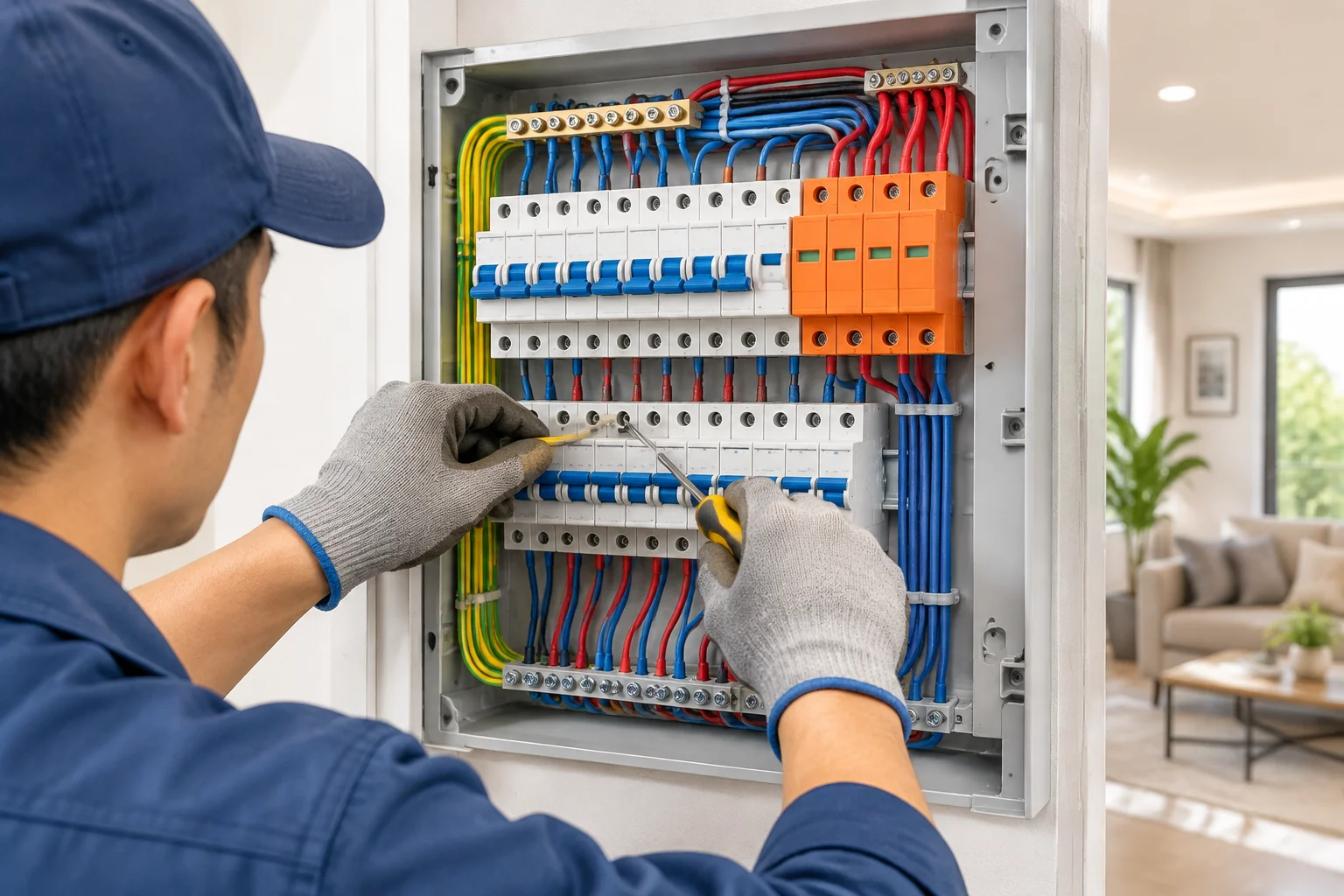
Whole-Home Surge Protection Installation
Main-panel mounting of whole-home surge protectors with dedicated grounding bonds and auxiliary voltage relays to divert transient spikes before they reach sensitive HVAC and kitchen circuits.
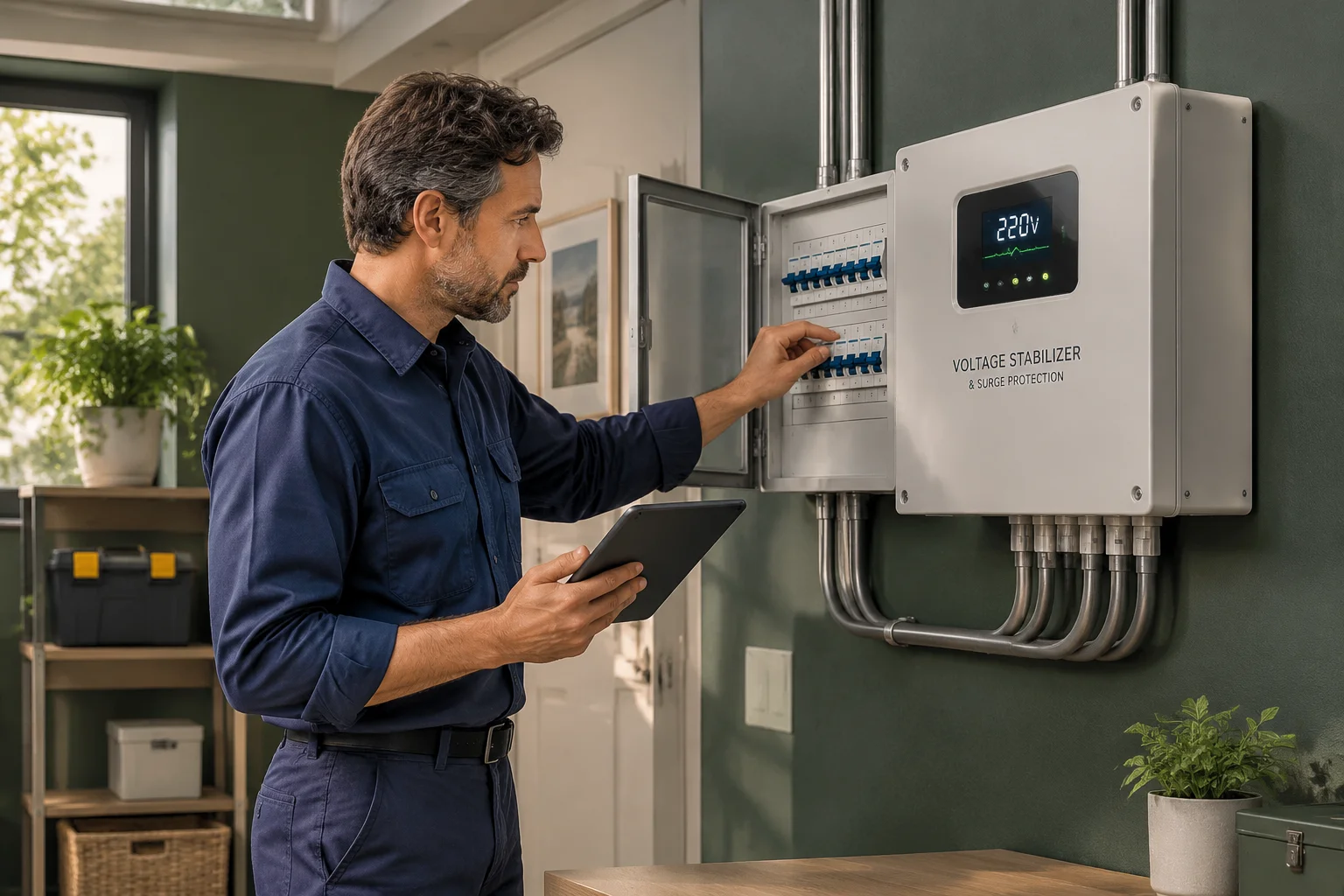
Professional panel integration, voltage stabilizer setup, relay diagnostics, and whole-home surge protection engineered for long-term grid resilience.
Select an installation or diagnostic discipline below to review technical specifications or assign it directly to your booking request.
Main-panel mounting of whole-home surge protectors with dedicated grounding bonds and auxiliary voltage relays to divert transient spikes before they reach sensitive HVAC and kitchen circuits.
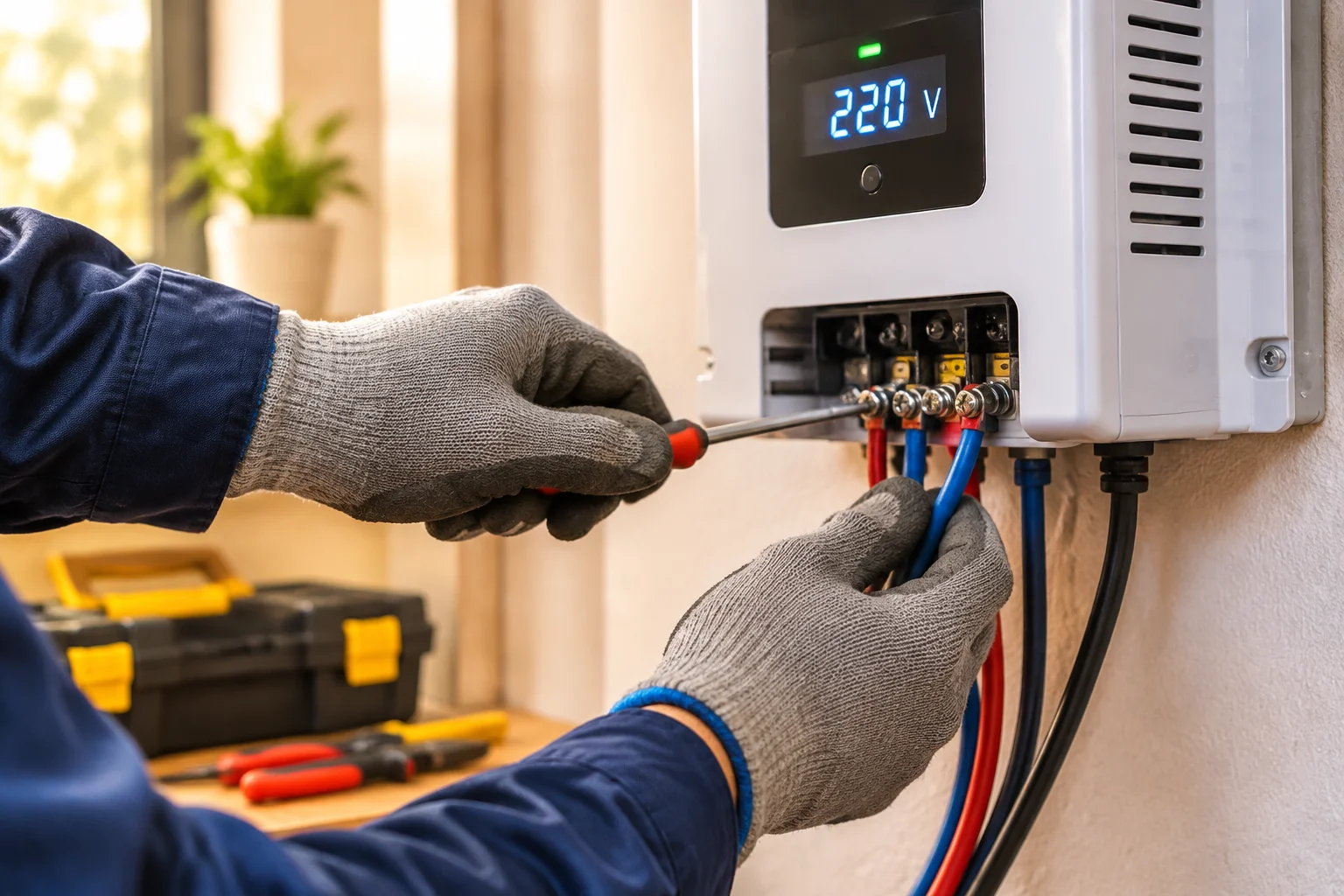
Precision wiring and bypass configuration for single-phase and three-phase voltage stabilizers, paired with fast-acting voltage relays to maintain steady power during severe utility brownouts.
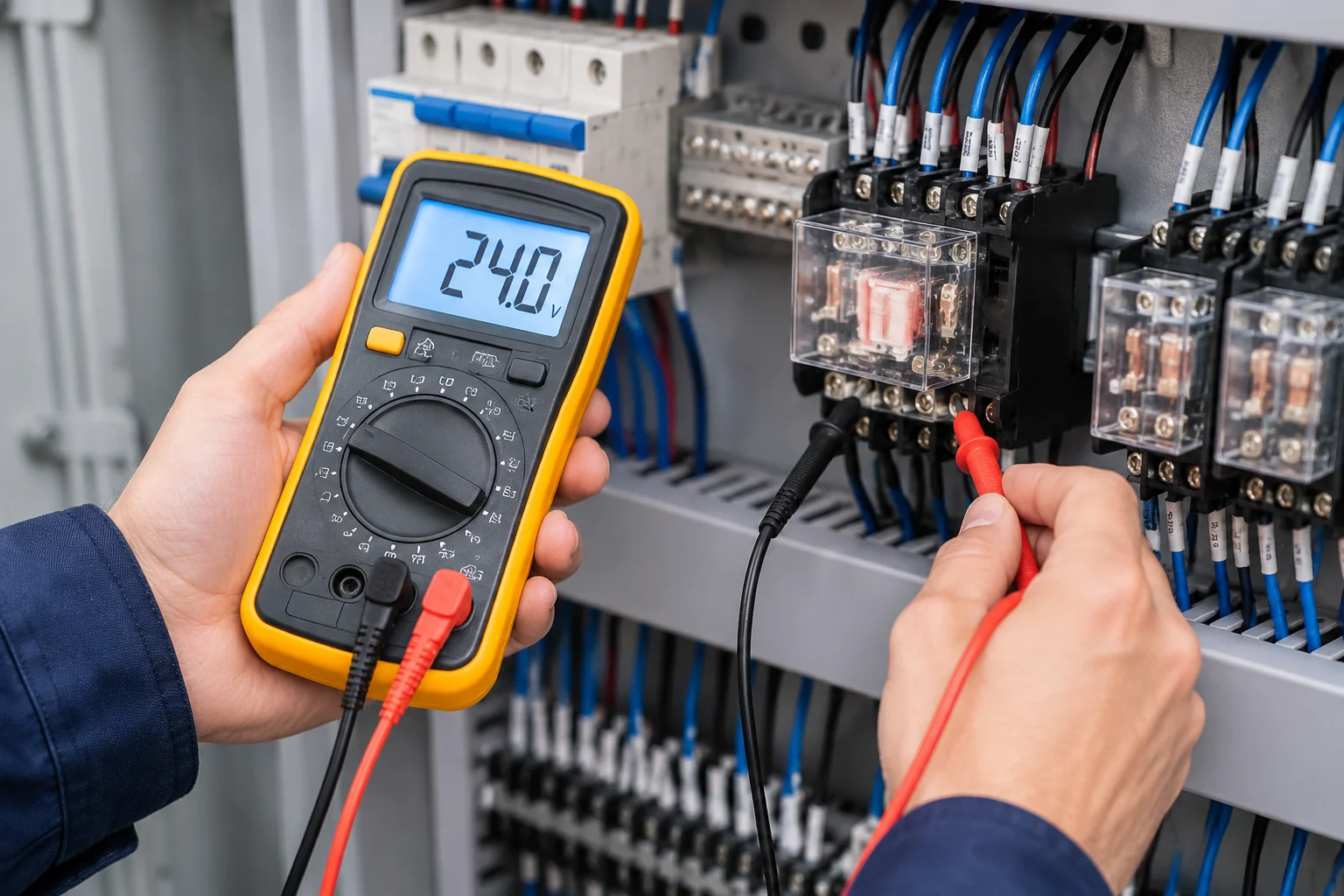
Comprehensive trip-threshold testing and thermal inspection for existing voltage relays and downstream voltage stabilizers, eliminating nuisance tripping while verifying rapid high-voltage disconnect behavior.
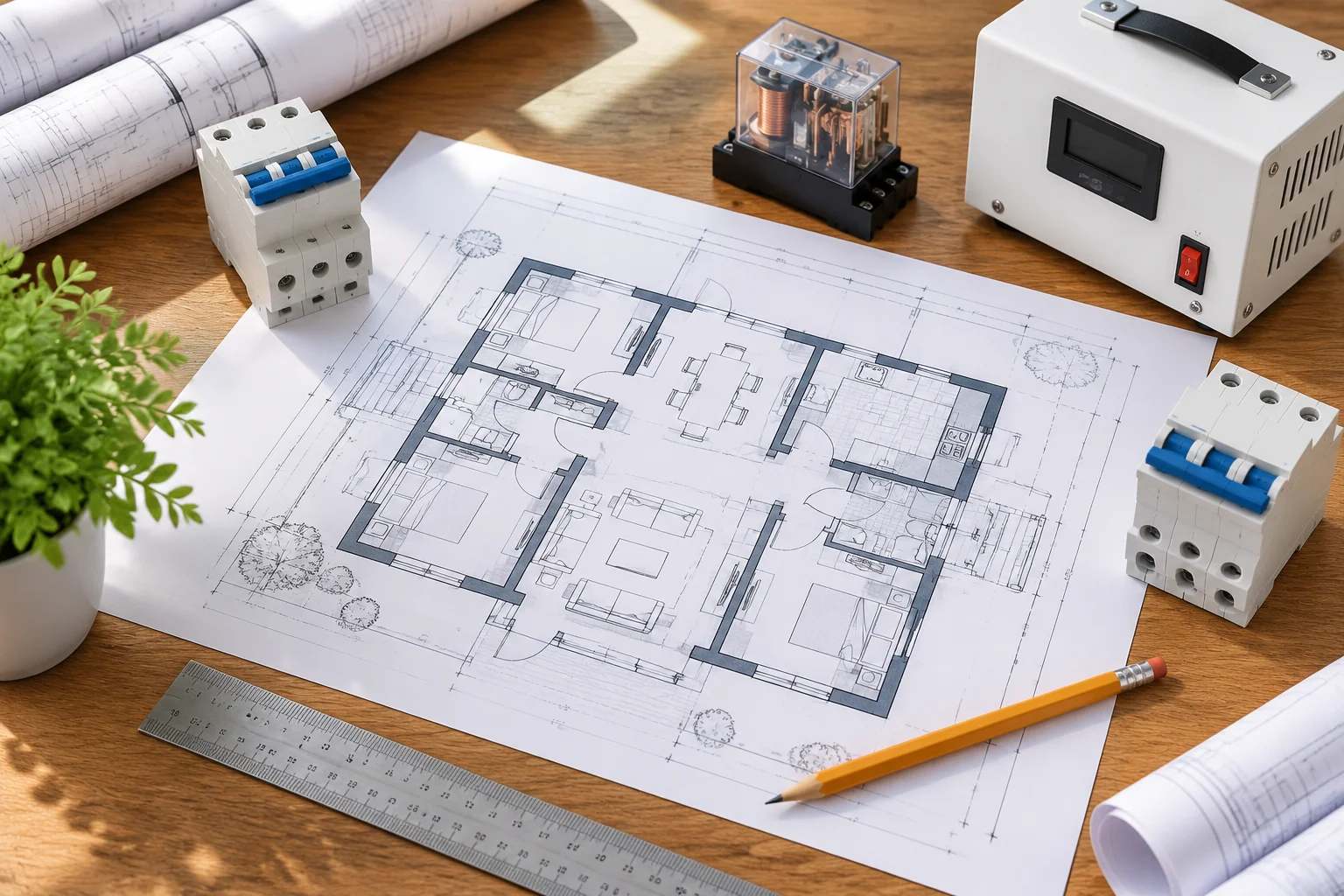
Tailored electrical architectures combining whole-home surge protectors, high-capacity voltage stabilizers, and backup transfer interlocks engineered for estates, workshops, and solar-ready homes.
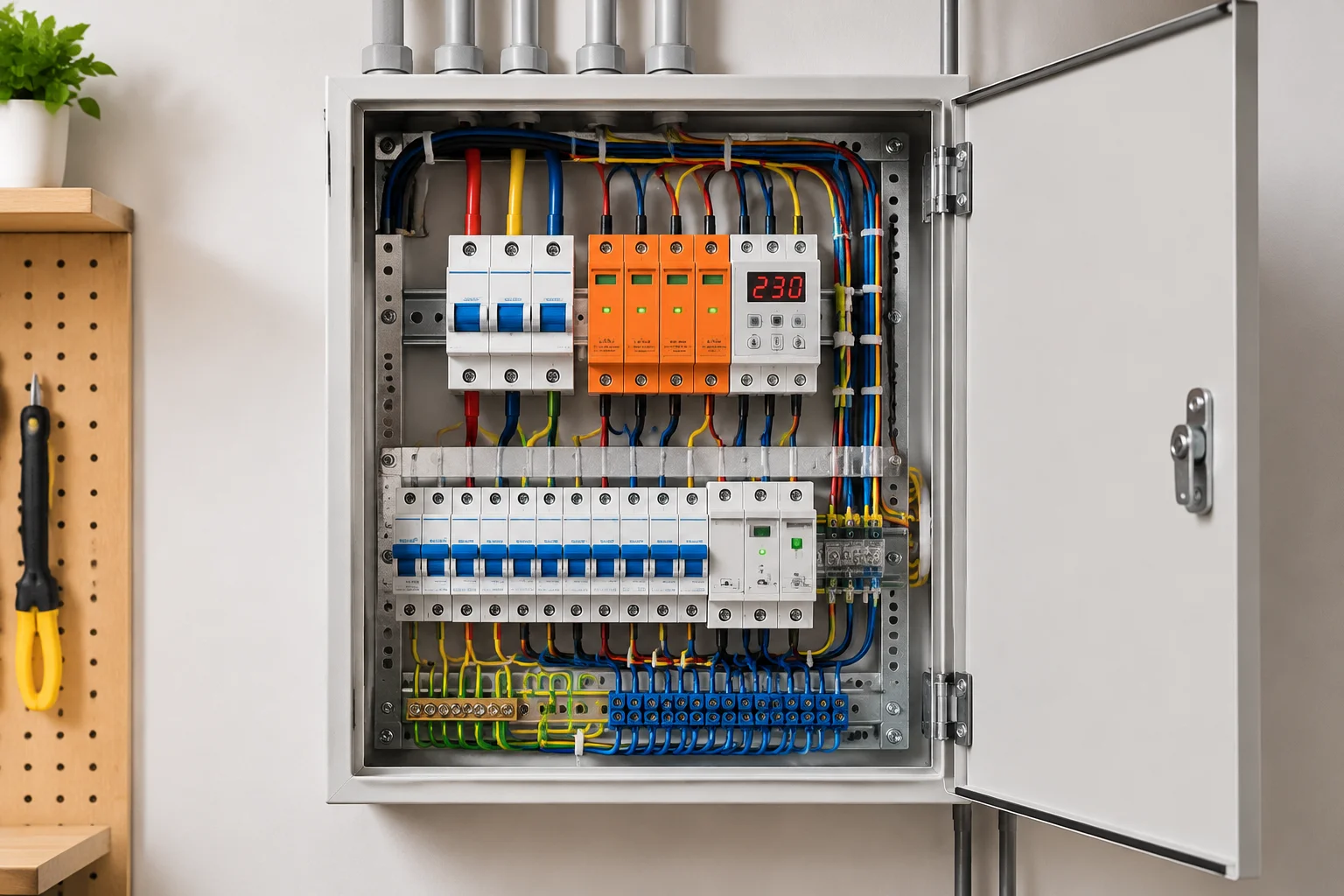
Every installed stabilizer, relay, and surge module undergoes load-bank calibration before sign-off.
Technicians log peak amperage draw across HVAC compressors, induction appliances, and EV chargers while measuring earth-ground impedance to ensure whole-home surge protectors clamp safely.
Equipment is mounted with short, low-inductance conductor runs, manual maintenance bypass switches, and clearly labeled breaker protection for effortless future servicing.
Before energizing your circuits, we simulate overvoltage and undervoltage faults to confirm protective relays disconnect within milliseconds and delay compressor restart safely.
Standard Type 1 or Type 2 surge arrester integration at the main panel takes 2 to 3 hours. Full voltage stabilizer setups with manual bypass switchgear typically require 4 to 6 hours depending on feeder gauge and sub-panel layout.
Voltage relays disconnect power when grid voltage exceeds safe bounds, whereas voltage stabilizers actively correct fluctuating input voltage so appliances remain running smoothly. Combining both with surge protection provides complete multi-stage defense.
Yes. Our Relay System Diagnostics service inspects relay delay timers, neutral integrity, and contact wear to isolate why protective cutoffs occur and recalibrate thresholds without sacrificing safety.
A scheduled panel de-energization window of 60 to 120 minutes is required to terminate main feeder lugs and ground conductors safely. We coordinate this window before work begins.
Choose your service scope, enter a valid US callback number, and share any electrical panel notes. Our commissioning team prepares the required hardware checklist prior to scheduling.